In recent years, environmental protection and sustainable development have gradually become key buzzwords in the global fashion and textile industries. Have you ever come across terms such as "recycled fiber," "rPET," or "GRS certification" on clothing hangtags? Or perhaps, when shopping for performance apparel, you have been drawn to "eco-friendly recycled fabrics" while harboring doubts: Are recycled fabrics merely an environmental marketing gimmick, or do they represent a new generation of technological materials? Will their quality be compromised? Are they comfortable to wear?
Today, we will provide a comprehensive analysis of the origins and evolution of "recycled fabrics," covering their sources, manufacturing processes, performance characteristics, and their position and trends in the global market. Our aim is to break down the stereotype that "recycled equals low-end" and to foster a renewed understanding of this emerging "green force."
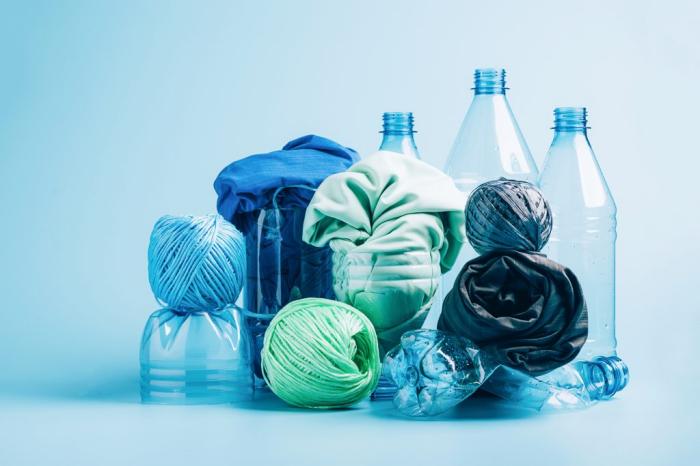
As the name suggests, recycled fabrics are materials produced by reclaiming waste resources—such as plastic bottles, discarded clothing, fishing nets, and industrial textile offcuts—which are then reprocessed into yarns through modern manufacturing techniques and subsequently woven into fabrics. The term "recycled" does not mean "previously used"; rather, it refers to raw materials that have been given a new lease on life through reprocessing and can be used to manufacture brand-new apparel, home textiles, bags, and other products.
Common raw materials for recycled fabrics include:
• rPET (recycled polyester fiber): One of the most common recycled materials, sourced from mineral water bottles and beverage bottles. It is transformed into polyester yarn through cleaning, shredding, melting, and spinning.
• Recycled nylon (e.g., ECONYL®): Nylon 6 is extracted from discarded fishing nets and carpets and produced through chemical recycling technology.
• Recycled cotton/wool/cashmere: Natural fibers are reclaimed from old garments or industrial textile offcuts, then re-opened and re-spun into usable new fabrics.
• Bio-based recycled fibers: Such as recycled bamboo fiber and corn fiber (PLA), emphasizing renewable resources and environmentally friendly cultivation.
These fabrics are far from being crudely produced "rehashed goods." Rather, through a series of high-tech processes, they achieve performance metrics comparable to— and in some respects surpassing—those of virgin materials.
The conventional perception holds that "recycled items are necessarily of poor quality." In reality, however, modern recycled fabrics have completed an evolution from "usable" to "high-performance" and ultimately to "premium." Their advantages extend far beyond environmental friendliness; they can even rival traditional fabrics in terms of functionality and aesthetics.
The use of recycled materials can significantly reduce carbon emissions, water consumption, and reliance on petroleum. For example:
• One ton of rPET polyester fiber can reclaim approximately 60,000 plastic water bottles;
• Compared with conventional polyester, the rPET production process can reduce carbon emissions by over 65%;
• The use of recycled nylon can reduce water consumption by approximately 90%.
Many people worry that recycled fabrics have inferior performance, but this is an outdated misconception. High-quality recycled fabrics offer:
• Excellent stretchability and wrinkle resistance, making them suitable for sportswear and outdoor apparel;
• Rapid moisture-wicking and moisture-absorbent, breathable properties, ideal for close-fitting garments;
• Wash durability and lightfastness, with resistance to fading;
• Some fabrics also incorporate functional finishes such as antimicrobial treatment, cooling sensation, and UV protection.
Many international brands have adopted these fabrics on a large scale precisely because of their functional properties. Nike, Patagonia, Lululemon, and ZARA all have dedicated recycled product lines.
Generation Z consumers are increasingly concerned about environmental protection, animal welfare, and social responsibility. They are willing to pay a premium for "brands with a conscience," and recycled fabrics serve as a key gateway for brands to demonstrate their commitment to sustainability. Wearing a garment made from reclaimed plastic bottles can feel like wearing a piece of green narrative, fostering a greater sense of identification and engagement.
Recycled fabrics come in a wide variety. The following table outlines several mainstream types, their characteristics, and applications:
Fabric Type | Raw Material Source | Characteristics | Application Scenarios |
Recycled Polyester (rPET) | Plastic bottles | High strength, low cost, color stability | Sportswear, yoga apparel, T-shirts |
Recycled Nylon | Fishing nets / carpets | Good elasticity, tear resistance | Swimwear, leggings, performance apparel |
Recycled Cotton | Old garments, textile offcuts | Soft, moisture-absorbent | Loungewear, T-shirts, denim |
Recycled Wool | Reclaimed wool sweaters, scarves | Warm, strong natural feel | Winter apparel, woolen fabrics |
The term "recycled" is susceptible to misuse. The following certifications serve as important benchmarks for verifying whether recycled fabrics are authentic and reliable:
• GRS (Global Recycled Standard) certification: Currently the most internationally recognized recycled fiber certification. It requires that the recycled content in a fabric exceed 20% and tracks environmental standards throughout the entire processing chain.
• OEKO-TEX® STANDARD 100: Tests for the presence of chemical substances harmful to the human body.
• rPET-specific coding and traceability labels: Some brands provide independent recycling identification numbers and source tracing for each batch of rPET fabric.
• Environmental declarations or sustainability reports: Reputable brands provide detailed information on their websites or hangtags regarding the proportion of recycled content, functional properties, and certifications.
Tip: If a product merely states "eco-friendly material" without specifying the recycled content percentage or providing certification information, it is likely nothing more than a "marketing concept." |
Recycled fabrics represent not merely a consumer trend but a mainstream direction for new materials driven by global markets and policies:
1. Policy support: The European Union is set to implement the Green Product Passport scheme; California in the United States has already begun rolling out textile traceability mechanisms;
2. Green tariffs and carbon labeling: Future export products will be required to declare their carbon footprints, and the use—or non-use—of recycled materials will directly impact trade access.
3. Capital market interest: Recycled materials and eco-friendly supply chains represent an emerging investment track, with billions of US dollars already invested globally in related fields.
Recycled fabrics are far more than just a piece of cloth. They represent a response to resource waste, a reflection on the excesses of fast fashion, and, more importantly, an industry upgrade and value reconstruction.
They are neither cheap nor half-hearted, and certainly not "inferior products." Rather, they embody the attitude of a brand, the responsibility of a manufacturer, and our shared choice for a better future.
Texstar is one of the exceptional fabric manufacturers with certification. Get a free quote now!