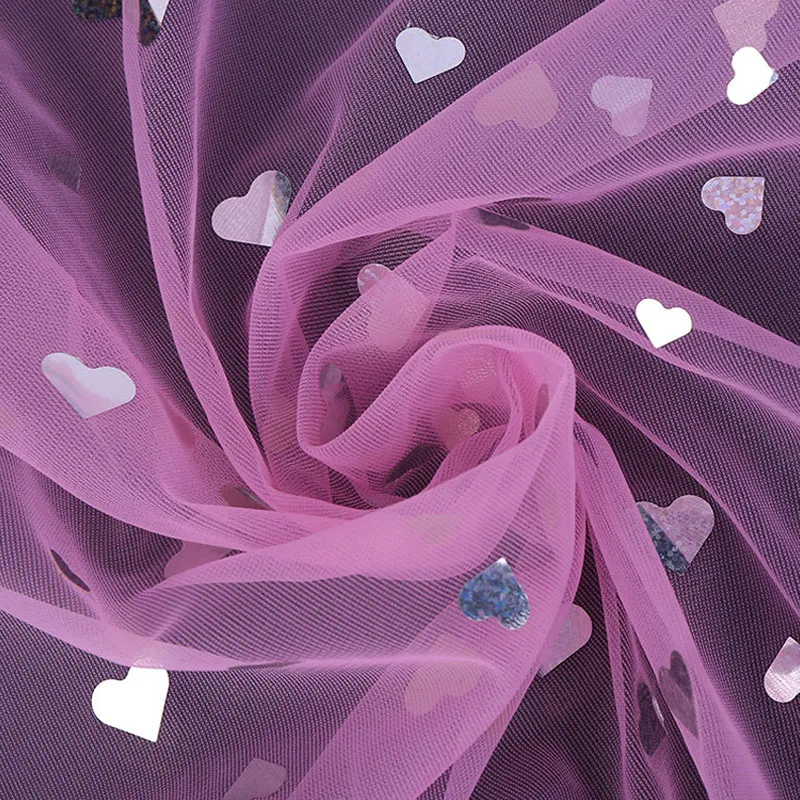
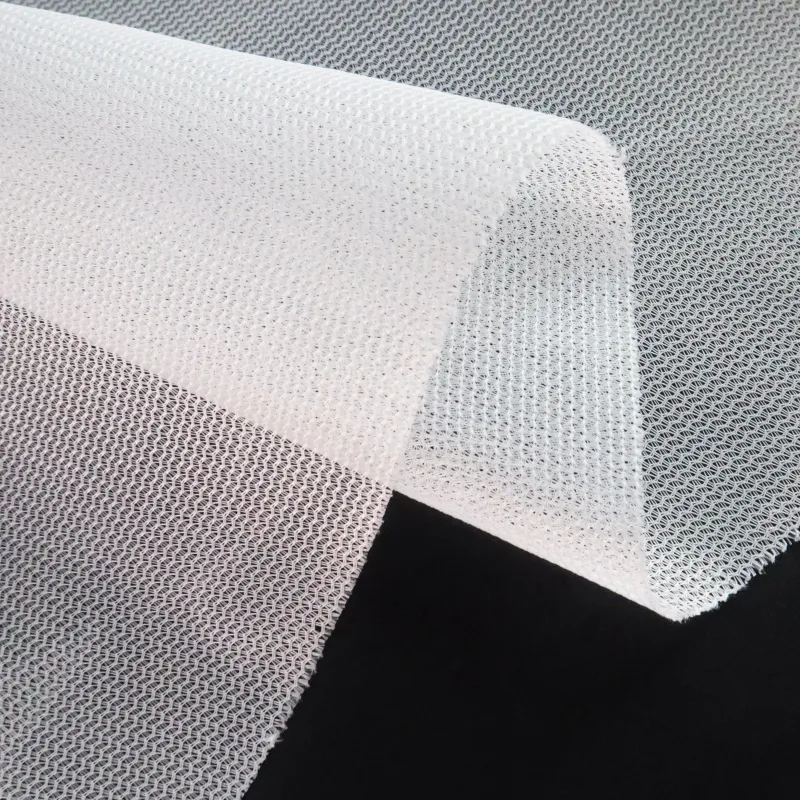
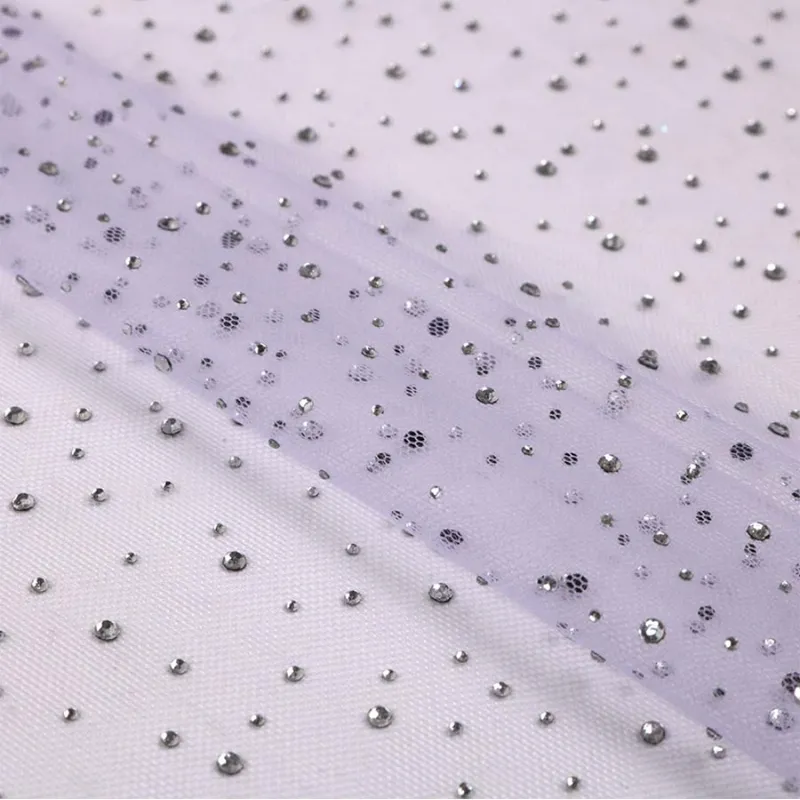
Tulle is a lightweight, open-mesh fabric known for its fine net-like structure and airy appearance. Manufacturers commonly produce tulle from polyester or nylon fibers. Its open construction gives the fabric excellent transparency while keeping it lightweight.
Tulle can feel soft and flexible, although its stiffness varies by fiber, yarn, and finishing process. Softer tulle works well for flowing garments, while stiffer varieties provide more volume and structure.
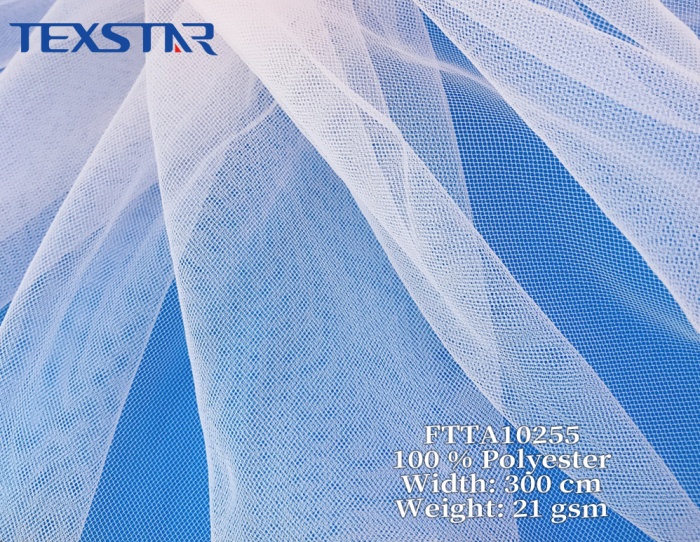
Common applications include wedding veils, bridal dresses, skirts, ballet costumes, eveningwear, decorations, and fashion accessories.
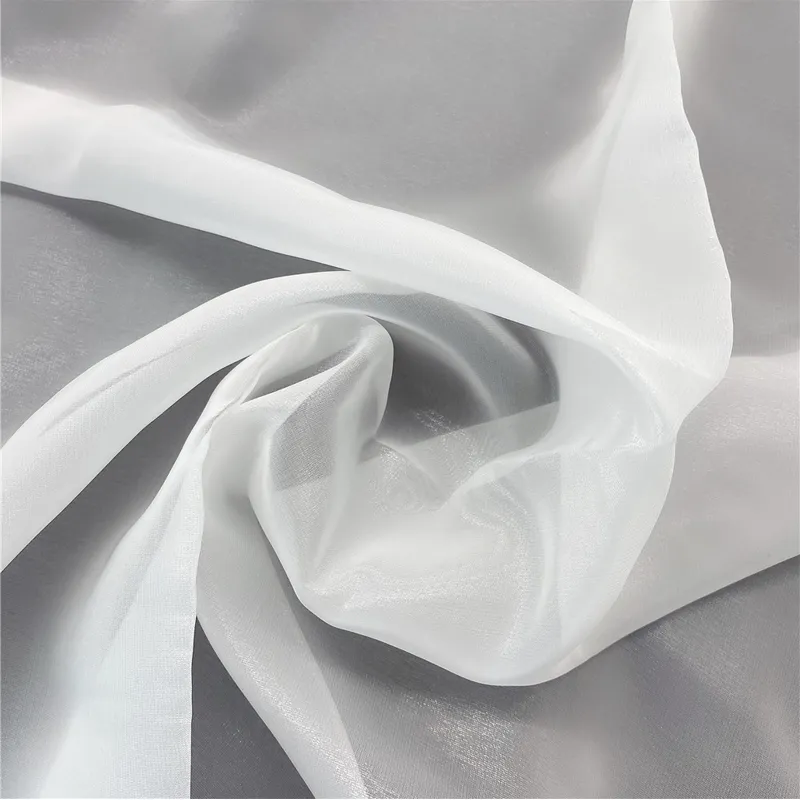
Organza is a lightweight, sheer woven fabric with a smooth surface and crisp hand feel. It usually features a plain-weave construction that gives the fabric a more structured appearance.
Unlike the open mesh structure of tulle, organza has a closely woven surface. This construction gives it a smooth texture, subtle sheen, and relatively firm shape.
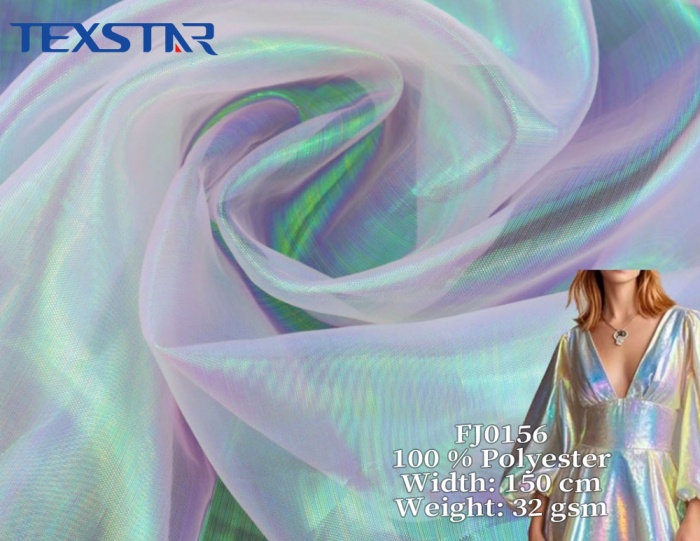
Organza is commonly used for wedding dresses, eveningwear, sleeves, bows, overlays, fashion accessories, and decorative details.
Structural Feature | Tulle Fabric | Organza Fabric |
Construction | Open mesh construction | Woven construction |
Basic Structure | Yarns form a fine net-like structure | Warp and weft yarns form a closely woven surface |
Yarn Arrangement | Creates visible openings between yarns | Creates a compact and continuous fabric surface |
Surface Structure | Open and porous | Smooth and tightly woven |
Mesh Opening | Clearly visible | No obvious mesh openings |
Fabric Shape | Can range from soft to stiff depending on construction and finishing | Naturally crisp and holds its shape well |
Transparency | Comes mainly from the open mesh structure | Comes from the fine, lightweight woven structure |
Visual Effect | Airy, delicate, and net-like | Smooth, clean, and elegant |
The garment style is one of the first factors to consider.
Choose tulle when you want a soft, airy, or voluminous appearance. It works well for wedding veils, layered skirts, ballet costumes, and romantic bridal designs.
Choose organza when the garment needs a smoother and more structured appearance. It works well for evening dresses, structured sleeves, bows, overlays, and elegant fashion details.
Both tulle and organza can provide a sheer appearance, but their transparency looks different because of their fabric structures.
Tulle has an open mesh construction, which creates a clearly visible net-like effect. It is suitable when you want a lightweight and airy transparent layer.
Organza has a closely woven structure. It provides transparency while maintaining a smoother and more continuous surface.
Another important difference between tulle and organza is how they behave during sewing and edge finishing.
Tulle is generally easier to work with. Its lightweight mesh structure often allows designers to leave some edges unfinished, depending on the garment design. This can save processing time and help maintain a soft, airy appearance. Tulle is also forgiving in layered designs, where minor sewing imperfections may be less noticeable.
Organza requires more attention to edge finishing. Its woven structure gives it a crisp and structured appearance, but unfinished cut edges can fray. For many garments, the edges need hemming or another finishing method to create a clean and durable result.
Texstar is one of the exceptional fabric manufacturers with certification. Get a free quote now!