Flag fabric is a lightweight textile designed for flags, banners, pennants, and outdoor displays.
The right fabric affects print quality, color visibility, durability, and flag movement.
For buyers, fabric composition, weight, width, air permeability, and printing compatibility all matter.
This guide explains the key factors to consider when sourcing flag fabric for commercial production.
Flag fabric is a lightweight woven or knitted textile engineered specifically for flags, banners, pennants, and outdoor displays. Unlike general apparel fabric, flag fabric is designed to balance four things at once: low weight (so it flies), tear strength (so it survives wind), printability (so colors stay vivid), and quick drying. The right fabric choice affects print quality, color visibility, durability, and how naturally the flag moves in the wind.
Most commercial flags today are made from polyester in one of three constructions. Each behaves differently in wind, takes ink differently, and suits a different use case.
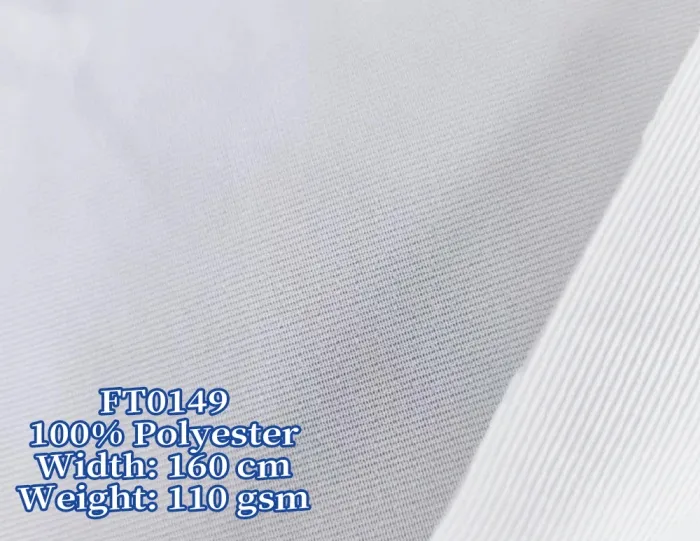
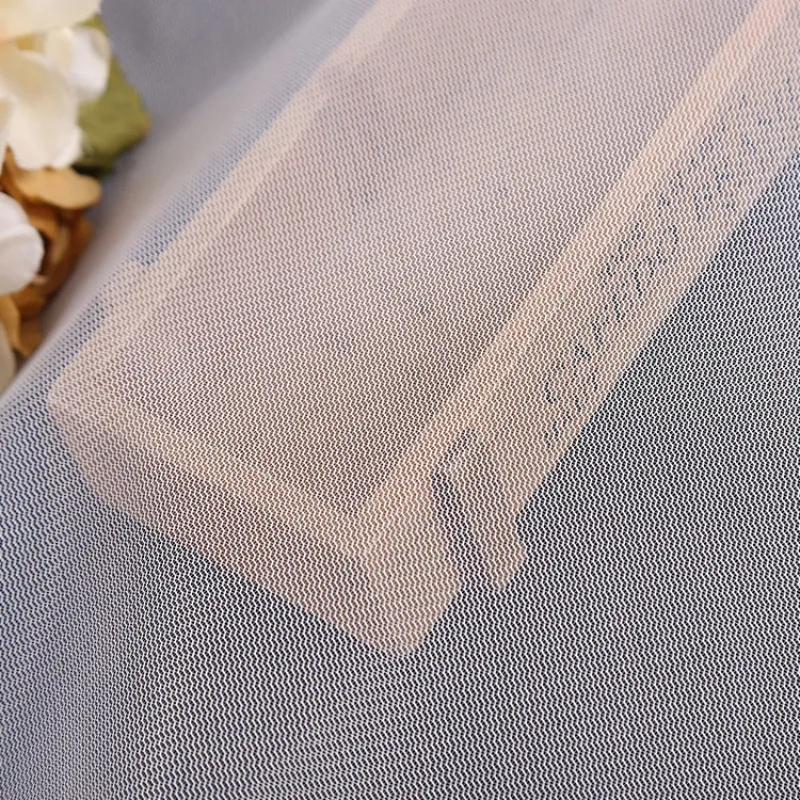
Knitted polyester is the workhorse of modern printed flags, typically ranging from 110–130 GSM. Its looped knit structure gives it a soft drape and excellent movement in light wind, and the open construction allows air to pass through, which reduces strain on both the fabric and the pole.
Key characteristics:
Lightweight (usually 110–130 GSM) — flies easily, even in a breeze
Excellent dye sublimation performance — vivid, edge-to-edge full-color graphics
Soft drape and good show-through, so single-sided prints remain visible from the back
Best value for money — the standard choice for volume orders
Best for: feather flags, teardrop flags, advertising flags, promotional banners, trade show displays, and event flags.
Woven polyester is heavier and denser than knitted polyester — typically 150–160 GSM or more. Interlaced warp and weft yarns create a stable, structured surface with a more traditional, premium feel, and it stands up to UV exposure, strong wind, and continuous flying far better than lighter knits.
Because it is heavier, woven polyester needs a reasonable wind to fly properly, but it will outlast knitted fabric in harsh, exposed conditions. It is also the standard base for fully sewn flags and double-sided flag construction.
Best for: national and institutional flags, decorative flags, permanent outdoor displays, large flags on tall poles, and premium double-sided products.
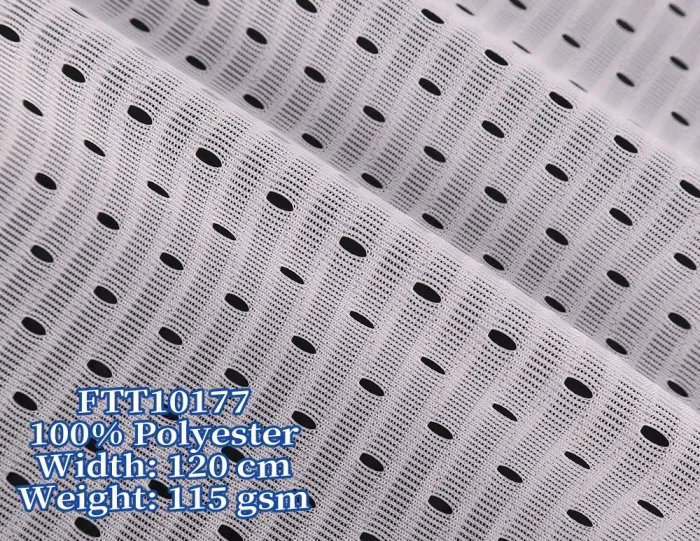
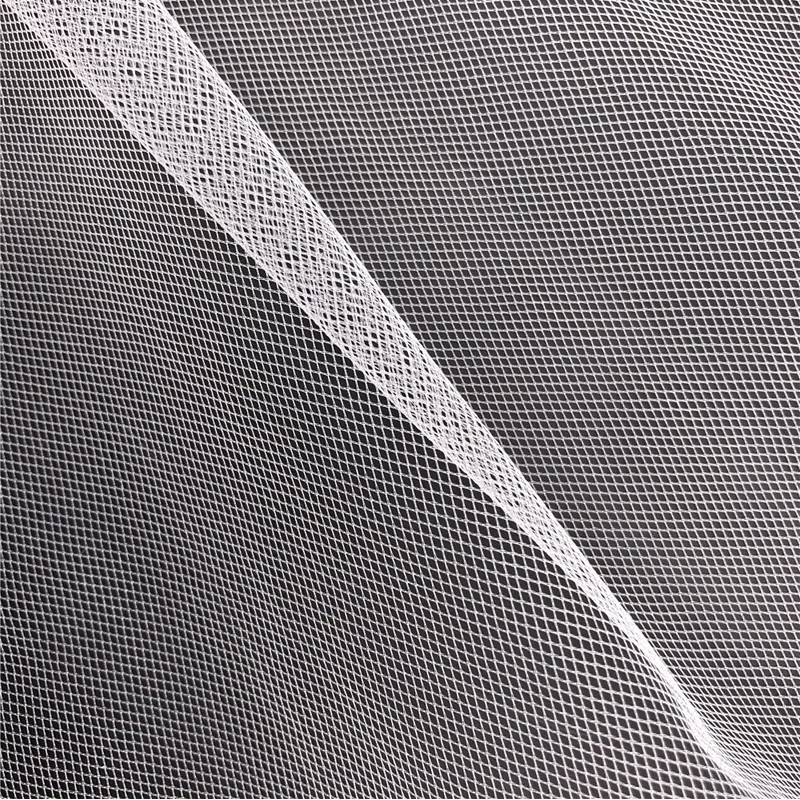
Mesh flag fabric uses an open, perforated construction that lets wind pass straight through the textile. This dramatically reduces the 'sail effect' — the force that tears flags and bends poles in exposed locations.
The trade-off is visual: print on mesh looks slightly less solid at close range. But for large formats and wind-exposed sites, durability wins.
Best for: large outdoor flags, building banners, fence wraps, coastal or rooftop displays, and any location with constant high wind.
Feature | Knitted Polyester | Woven Polyester | Polyester Mesh |
Typical GSM | 110–130 | 150–160+ | 90–140 (open construction) |
Wind behavior | Flies easily in light wind | Needs moderate wind; very durable | Best in high wind; low resistance |
Print quality | Excellent (sublimation) | Very good | Good (slightly textured) |
Feel / look | Soft, modern | Structured, traditional | Perforated, technical |
Best for | Promotional & event flags | National & institutional flags | Large / wind-exposed displays |
A lower GSM usually creates a lighter and more flexible fabric.
A higher GSM generally provides a heavier and more substantial construction.
For flag production, GSM can affect:
Flag movement
Drape
Wind resistance
Printing performance
Sewing and handling
Overall durability
Instead of choosing the lowest GSM, buyers should match fabric weight with the intended application.
Polyester is commonly used because it is lightweight, durable, and suitable for many printing processes.
Yes. Polyester can provide suitable durability and printing performance for many outdoor flag applications.
There is no single ideal GSM. The appropriate weight depends on the flag size, application, drape, wind exposure, and printing process.
Polyester flag fabrics are commonly compatible with dye sublimation printing. Always confirm the specific fabric and printing process with the supplier.
Texstar is one of the exceptional fabric manufacturers with certification. Get a free quote now!